
Nutrition Guide
Building healthy eating habits starts with understanding what goes on the plate.
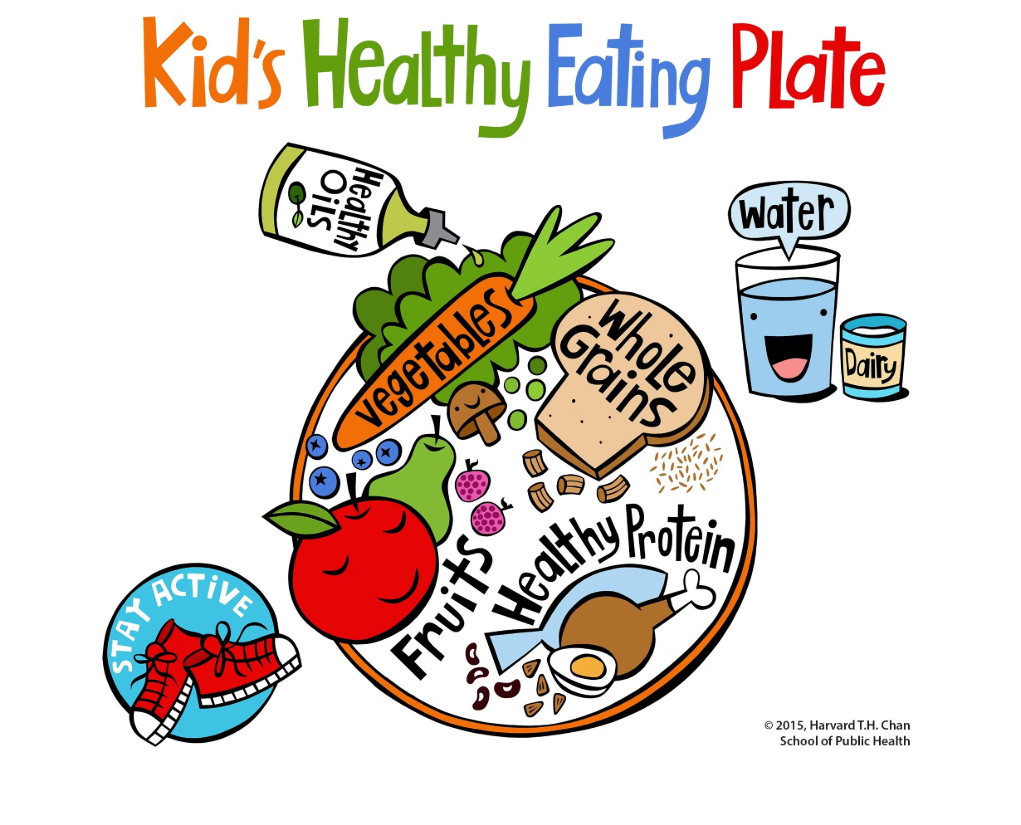
Copyright © 2015 Harvard T.H. Chan School of Public Health. For more information about The Kid's Healthy Eating Plate, please see The Nutrition Source, Department of Nutrition, Harvard T.H. Chan School of Public Health.
Kid's Healthy Eating Plate
Created by nutrition experts at Harvard, this visual guide helps children and families build varied, balanced meals. A simple starting point: fill half the plate with vegetables and fruits, then divide the other half between whole grains and healthy protein.
These ideas are educational, not individualized medical or nutrition advice. Families with questions about a child's diet should consult a qualified health professional.
What's on the Plate?
Vegetables
Fill part of half the plate with colorful vegetables, choosing plenty of variety. Potatoes and French fries do not count as vegetables because of their effect on blood sugar.
💡 Try it:
Add two different-colored vegetables to a meal, or offer sliced vegetables as a snack.
Fruits
Eat fruits of many colors and choose whole or sliced fruit instead of juice. Limit fruit juice to one small glass per day.
💡 Try it:
Pick a whole fruit for a snack, or combine two fruits in a colorful bowl.
Whole Grains
Use whole or minimally processed grains for part of the other half of the plate. Examples include whole wheat, brown rice, quinoa, whole-grain pasta, and 100% whole-wheat bread.
💡 Try it:
Try brown rice in a bowl, whole-grain pasta at dinner, or 100% whole-wheat bread for a sandwich.
Healthy Protein
Choose beans, peas, nuts, seeds, fish, eggs, poultry, and other plant-based protein options. Limit red meat and avoid processed meats such as bacon, deli meats, hot dogs, and sausages.
💡 Try it:
Add beans to a grain bowl, try an egg with breakfast, or pair fruit with nuts or seeds.
Healthy Oils
Focus on the type of fat. Choose unsaturated fats and plant oils such as extra virgin olive, canola, corn, sunflower, or peanut oil. Limit butter to occasional use and avoid partially hydrogenated oils.
💡 Try it:
Use a plant oil for cooking or drizzle it over vegetables instead of adding butter.
Water
Make water the first choice with meals, snacks, and activity. Avoid sugary drinks such as soda, fruit drinks, and sports drinks.
💡 Try it:
Keep water within reach and offer it before other beverages.
Dairy
Serve dairy in smaller amounts than the main plate categories. Choose unflavored milk, plain yogurt, small amounts of cheese, and other unsweetened dairy foods.
💡 Try it:
Offer plain yogurt with fruit or a small serving of unsweetened dairy alongside the meal.
Staying Active
Children and adolescents should aim for at least one hour of physical activity each day. Activity can include unstructured play and does not require a gym or special equipment.
💡 Try it:
Trade some "sit-time" for "fit-time" with playground play, tug-of-war, walking, or another enjoyable activity.