
Fresh Starts: Healthy Bodies, Happy Minds
The latest science on kids’ health, explained in plain language, with simple, positive steps your family can take today.
In This Issue
Why are more kids than ever struggling with their weight, and what can families do about it? This month we look at three research reviews: how a few calm breaths can help kids thrive, the hidden chemicals that may be tipping the scales, and the trouble with highly processed snacks. No lectures, just practical ideas.
Breathe In, Shine On: The Calm Superpower of Mindful Kids
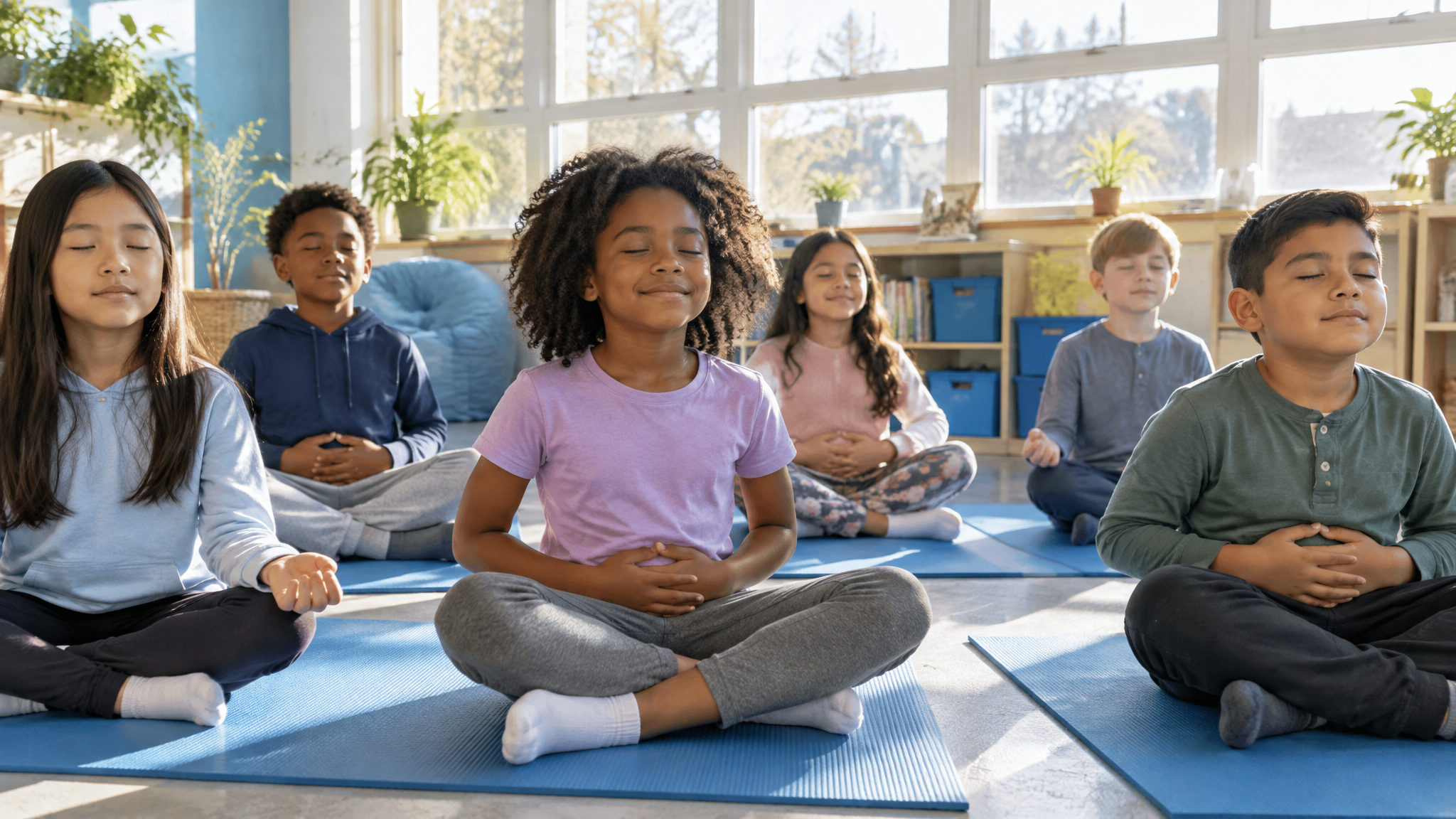
Healthy kids need healthy minds, too. Mindfulness simply means paying attention to the present moment, like noticing your breath, your body, or the sounds around you, without judging.
A 2021 review in Frontiers in Psychology by Filipe and colleagues gathered 29 studies of school-based mindfulness programs for children ages 6 to 12. The researchers wanted to know which meditation techniques actually help kids.
What helped kids most
- The evidence that mindfulness improves kids’ thinking skills, such as attention, focus, and self-control, was reasonably strong.
- Mindfulness also helped social and emotional skills like handling stress, getting along with others, and managing big feelings.
- The programs that worked used body-focused practices (breathing exercises, body scans) and mindful observation (noticing sights, sounds, and tastes).
- Kindness-focused practices (“sending kind wishes” to yourself and others) were often used to build emotional skills.
- Effects on school grades are still unclear. Only one study found improvements, so more research is needed.
Easy mindful moments for home
- Belly breathing: place a stuffed animal on your child’s tummy and watch it rise and fall for 5 slow breaths.
- Five senses check-in: name 5 things you see, 4 you hear, 3 you can touch, 2 you smell, and 1 you taste.
- Mindful bite: eat one raisin or berry very slowly and talk about its color, texture, and taste.
- Body scan at bedtime: relax from toes to head, one body part at a time.
- Kind wishes: before school, take turns saying “May you be happy, may you be healthy.”
- Start small, just 2–3 minutes a day, and practice together.
💡 The bottom line: A few calm breaths a day can help kids focus, feel better, and be kinder to themselves and others.
Source: Filipe et al., 2021, Frontiers in Psychology. Full reference below.
It’s Not Just Calories: Meet the Hidden “Obesogens” in Everyday Life
For years, we’ve been told that weight is simply “calories in, calories out.” Yet obesity keeps rising around the world, even with more diets, more gym memberships, and new medications. Scientists are asking: what are we missing?
A 2024 review in the International Journal of Obesity by Heindel and colleagues offers a big-picture answer. The researchers combined four leading theories of obesity into one model. A key part of that model is a group of everyday chemicals called obesogens: substances that can confuse the body’s hormone signals and nudge it toward storing fat.
What the research says, in plain English
- Obesogens can be found in air, food, food packaging, and common household products.
- Examples include some chemicals in plastics (like BPA and phthalates), nonstick and stain-resistant coatings (PFAS), certain pesticides, and some fragrances and personal-care products.
- These chemicals may send “false signals” that raise insulin, change how cells use energy, and affect appetite.
- The authors don’t say chemicals are the only cause. They say obesogens may make bodies more likely to gain weight from diet, and make it harder to lose it.
- Exposure early in life, even before birth, may matter most, which is why this matters so much for kids.
Simple swaps your family can start this week
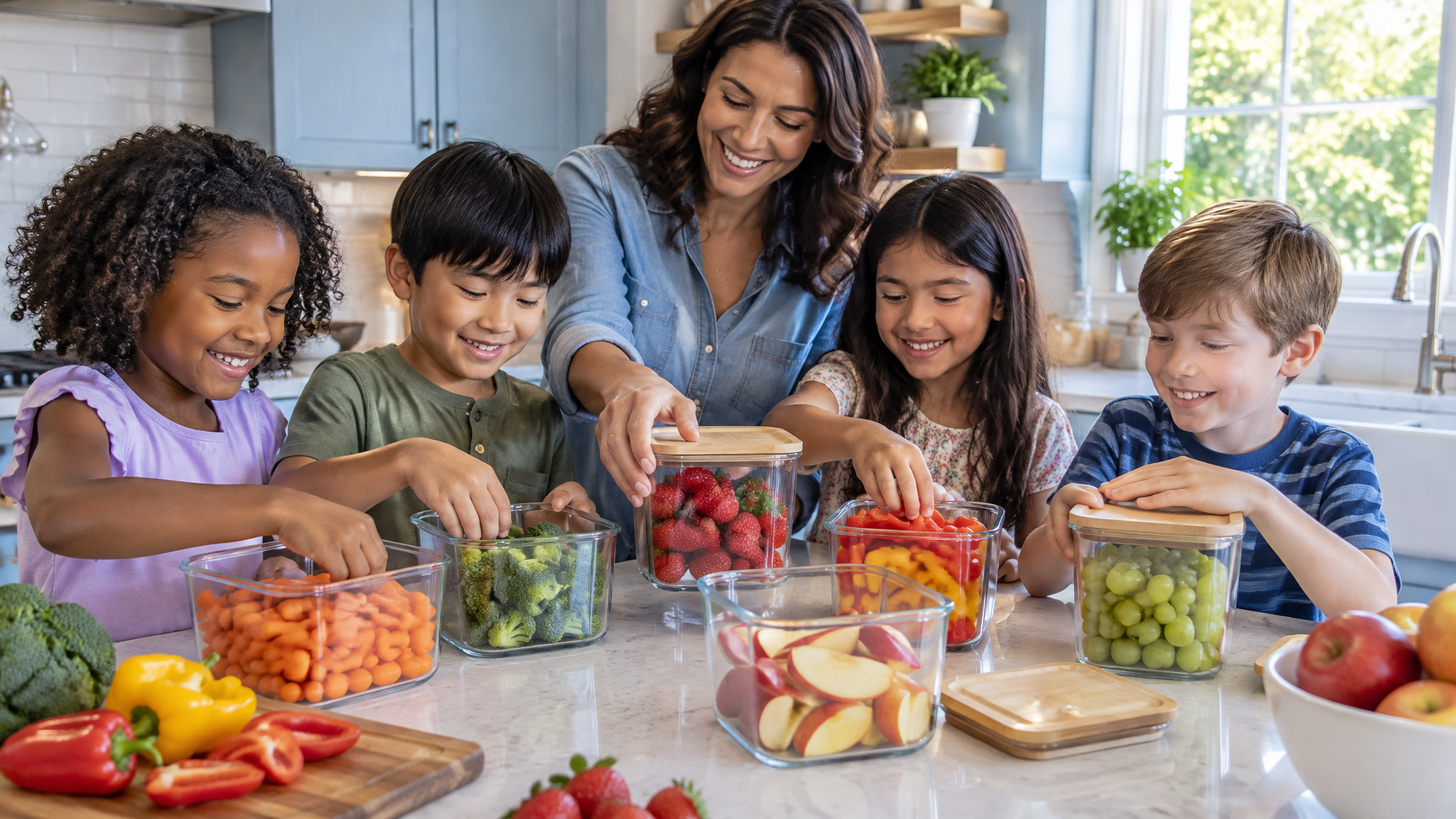
- Store and reheat food in glass or stainless steel instead of plastic, and never microwave in plastic.
- Choose fresh, whole foods (organic when you can) and cut back on ultra-processed foods.
- Cook with stainless steel or cast iron instead of worn nonstick pans.
- Pick fragrance-free soaps, lotions, and cleaners.
- Drink filtered water and carry a reusable stainless-steel bottle.
💡 The bottom line: You can’t control every chemical in the world, but small changes at home add up, especially for growing kids.
Source: Heindel et al., 2024, International Journal of Obesity. Full reference below.
Snack Attack: Why Highly Processed Foods Are Tough on Growing Bodies
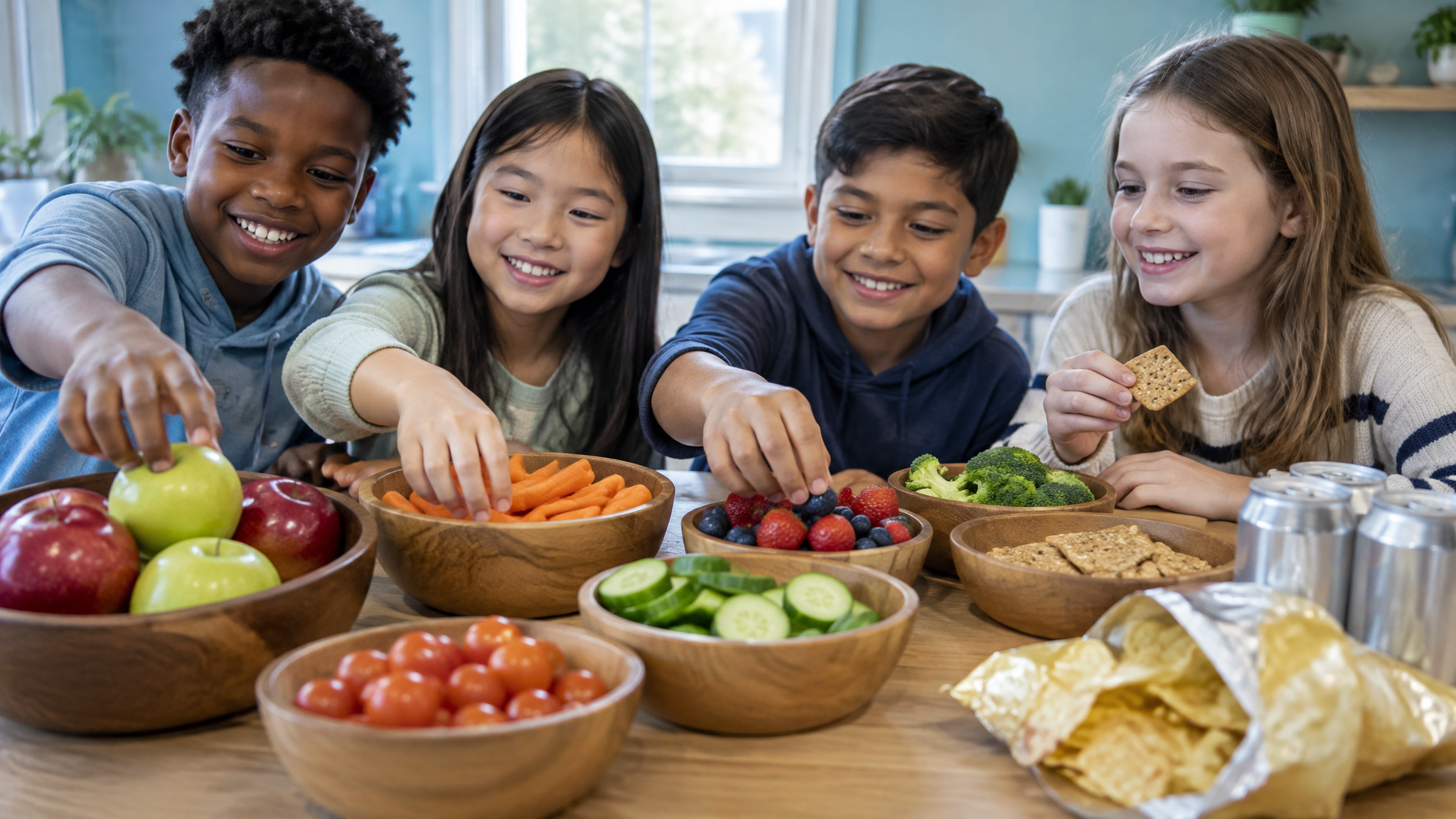
Chips, candy, sugary cereals, soda, frozen pizza, and packaged snacks are quick, tasty, and everywhere. These ultra-processed foods (UPFs) are made mostly from refined ingredients and additives, with little or no whole food left in them.
A 2025 review in the journal Nutrients by Calcaterra and colleagues looked at 112 studies on children and teens. The researchers found clear links between eating a lot of UPFs, gaining extra weight, and having more tummy troubles.
Why it matters
- Around the world, the share of kids and teens (ages 5–19) with overweight or obesity rose from about 8% in 1990 to about 20% in 2022, more than 390 million young people.
- In the U.S., about 1 in 5 teens has obesity.
- Eating a lot of UPFs is linked to more body fat, higher blood sugar and cholesterol problems, and greater heart-health risk in young people.
- Kids with extra weight are more likely to have ongoing stomach aches, constipation, and other gut problems.
- UPFs may upset the gut’s “good bacteria,” weaken the gut lining, and cause low-level inflammation that affects the gut–brain connection.
Positive steps for happier tummies
- Use the “grandma test”: if she wouldn’t recognize it as food, enjoy it only now and then.
- Keep ready-to-grab snacks in sight: washed fruit, cut veggies with hummus, nuts, or plain yogurt with berries.
- Cook simple meals together. Kids who help make food are more likely to try it.
- Swap sugary drinks for water, or water with a splash of fruit.
- Fill half the plate with fruits and vegetables. See our Nutrition Guide for the Healthy Eating Plate.
- Read labels: shorter ingredient lists with words you know are usually a better pick.
💡 The bottom line: It’s about progress, not perfection. Replacing even one processed snack a day with a whole food is a great start.
Source: Calcaterra et al., 2025, Nutrients. Full reference below.
References
- Calcaterra, V., Cena, H., Ferrara, C., Magenes, V. C., Boussetta, S., Zambon, I., & Zuccotti, G. (2025). Highly processed food and functional gastrointestinal disorders in children and adolescents with obesity: The preventive challenge—A narrative review. Nutrients, 17(23), 3744. https://doi.org/10.3390/nu17233744
- Filipe, M. G., Magalhães, S., Veloso, A. S., Costa, A. F., Ribeiro, L., Araújo, P., Castro, S. L., & Limpo, T. (2021). Exploring the effects of meditation techniques used by mindfulness-based programs on the cognitive, social-emotional, and academic skills of children: A systematic review. Frontiers in Psychology, 12, 660650. https://doi.org/10.3389/fpsyg.2021.660650
- Heindel, J. J., Lustig, R. H., Howard, S., & Corkey, B. E. (2024). Obesogens: A unifying theory for the global rise in obesity. International Journal of Obesity, 48, 449–460. https://doi.org/10.1038/s41366-024-01460-3
This newsletter is for general education and is not medical advice. Please talk with your child’s doctor about any health concerns.